
Orthopaedics & Sports Medicine
MCT System for PRP-derived exosomes
Photothermal biomodulation for enhanced platelet-derived regenerative signalling.
For healthcare professionals
CE Class IIa & IIb medical device · ISO 13485 · Point-of-care
For the MSK cases where
Standard PRP isn’t enough.
Not every patient responds to conventional PRP. Response varies with the patient and can be limited in complex, refractory cases.
Marín-Fermín et al., Mil Med 2024 · Boffa et al., Am J Sports Med 2024
01
Persistent pain
02
Limited function
03
Surgery not yet indicated
04
Need for rapid recovery
The evolution of PRP
From platelets to PRP-derived exosomes
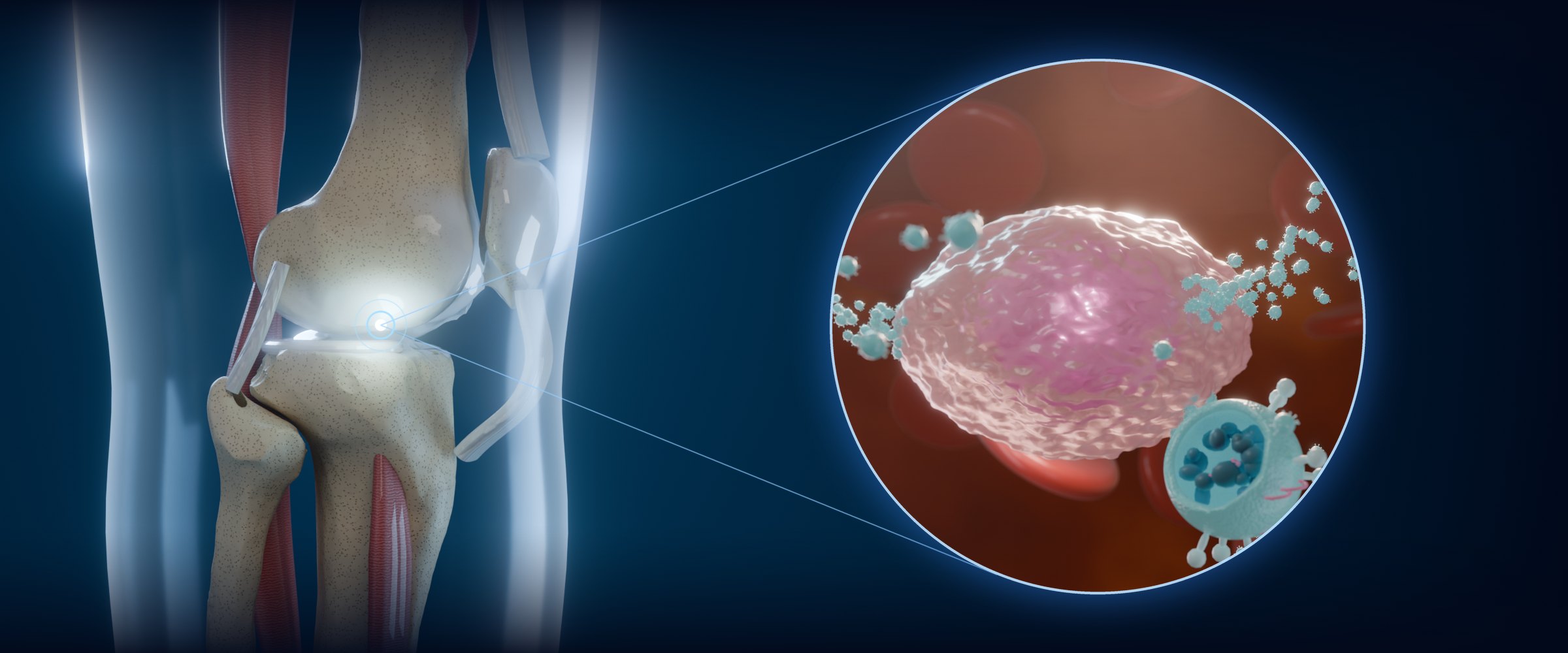
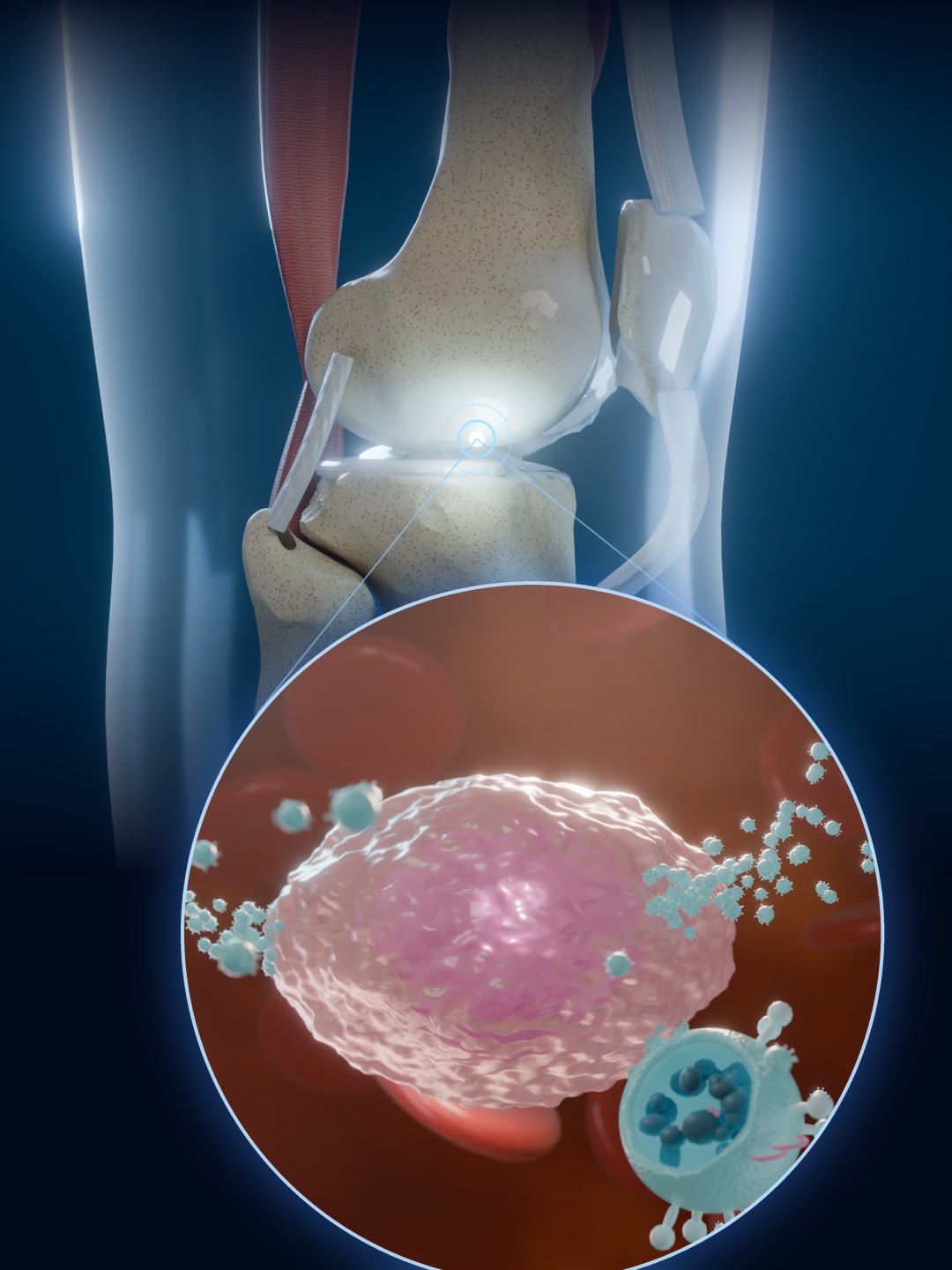
Photothermal biomodulation of the patient’s own PRP promotes the release of platelet-derived exosomes, by exocytosis, at the point of care.
Illustration. Exosomes are enlarged for legibility.
What is MCT System
Promoting autologous PRP-derived exosome release
Via photothermal biomodulation, within a standard PRP-based protocol.
Inside the MCT System
 01Controlled light + temperature condition PRP
 02Biological signalling
 03PRP-derived exosome release
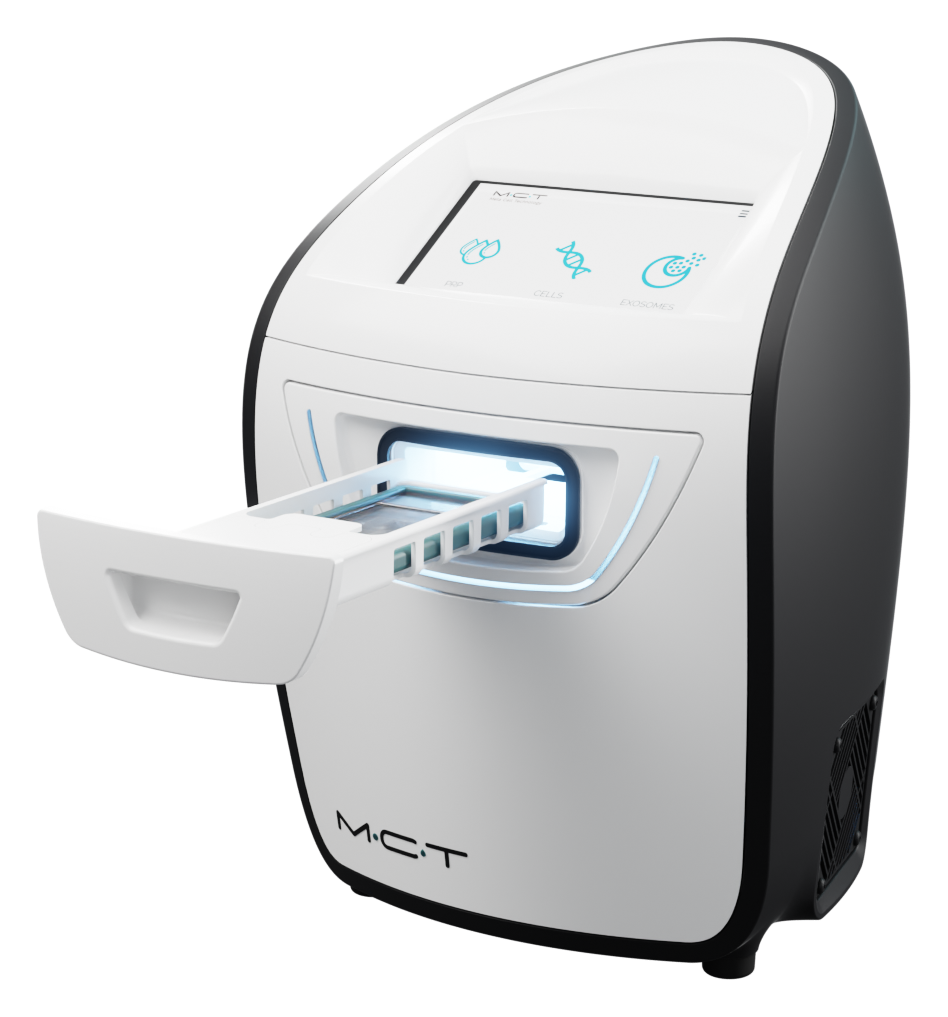
MCT System improves PRP bioactivity through increased growth factor release, autologous platelet-derived exosome secretion and increased ATP production, while offering:
- Standardised process and traceability
- Point-of-care, same-day protocol
- Focused on pain, function and return to activity
In your practice
Easy integration
One added step within a familiar PRP workflow. The MCT Kit works with any commercial PRP kit.
 Step 1Draw
 Step 2Prepare
 MCT SystemCondition
 Step 4Inject
The mechanism behind MCT System
Amplifying the signal of autologous samples
Select the one-touch preset based on the biological output.
For musculoskeletal conditions
- Grade II to IV osteoarthritis
- Chronic and acute tendinopathies
- Ligament tears
- Other musculoskeletal pathologies
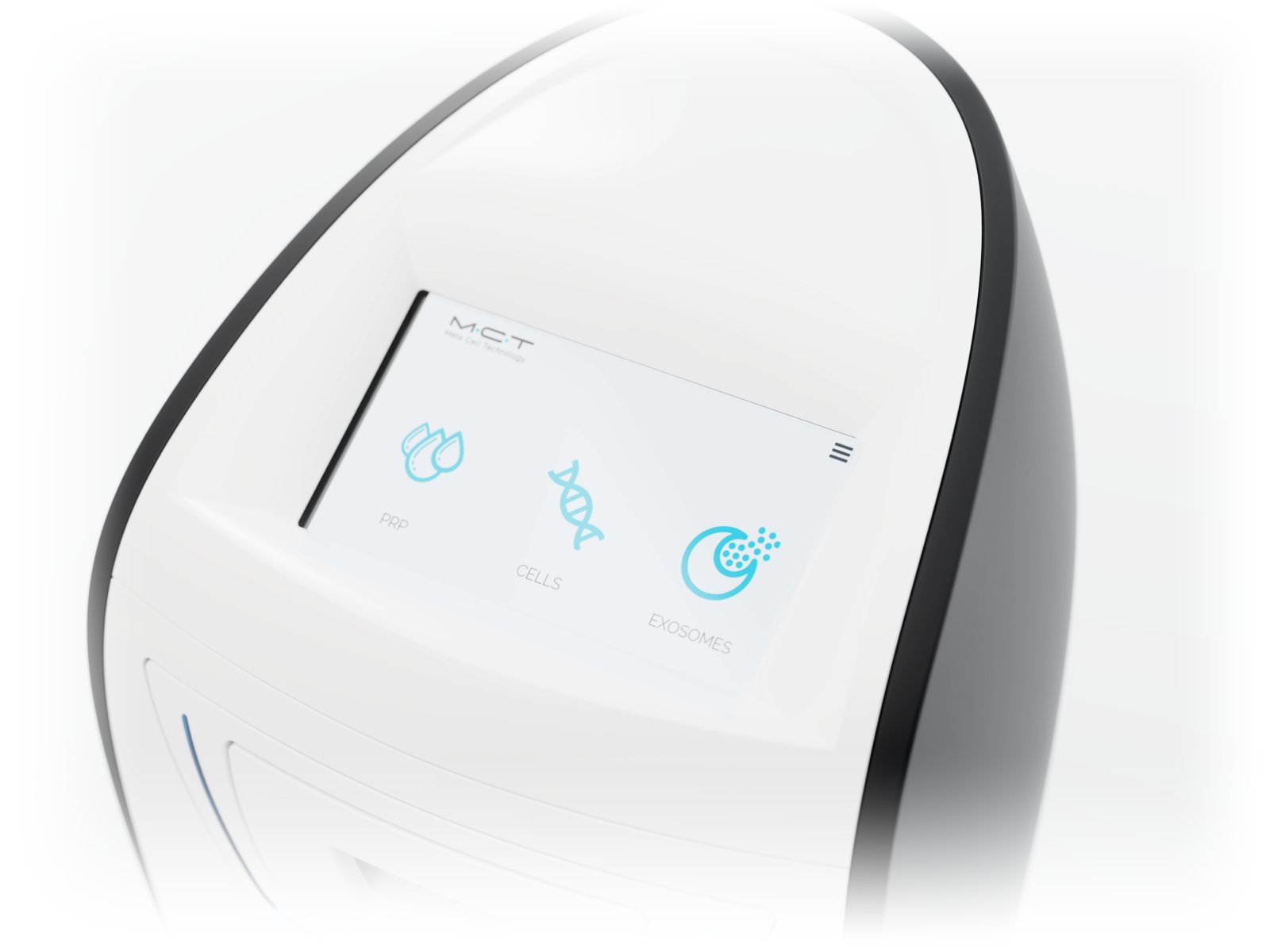
PRP preset
MCT Plasma
Acute injuries & early-stage OA
Indications
- Acute muscle, tendon & ligament injuries
- Early tendinopathies
- Sports soft-tissue injuries
- Mild cartilage lesions
- Goal
- Early healing response
- Output
- VEGF · EGF · FGF · ATPHigher growth factor levels than standard PRP1
620 nm · 1 J/cm² · 10 min | 4 °C · 15 min
1 Pinto H. et al. PRIME Journal, 2020.
Exosome preset
MCT Exosomes
Chronic degenerative conditions
Indications
- Moderate-to-advanced OA
- Chronic tendinopathies
- Degenerative tendon & ligament lesions
- Recurrent, poor-healing injuries
- Degenerative cartilage lesions
- Goal
- Tissue homeostasis & remodelling
- Output
- 299.6 × 10⁹exosomes / mL, in vitro2
467 nm · 1 J/cm² · 10 min | 37 °C · 10 min
2 Cordero L. et al. J Photochem Photobiol, 2025.
Evidence
Published with MCT System
Published · MechanismExosome quantification in MCT-conditioned PRP: 299.6 × 10⁹ particles per mL, by nanoparticle tracking analysis.Cordero L, Domingo JC, Sánchez-Vizcaíno Mengual E, Pinto H. Journal of Photochemistry and Photobiology, 2025.
Published · ReviewPhotothermal preconditioning of platelet-rich plasma: an emerging regenerative strategy.Sánchez-Vizcaíno Mengual E, Cordero L, Pinto H. Regenerative Therapy, 2026.
In progressOrthopaedic clinical validation.Results will be published when available.
MCT in orthopaedics
Stay informed on MCT in orthopaedics
Get in touch to receive the orthopaedic brochure as soon as it is released, clinical protocols, new evidence and invitations to upcoming webinars.
For healthcare professionals.

