
MCT System · Add-on
MCT Exo-Tech
An injectable autologous scaffold: the patient’s own plasma gel, loaded with MCT Exosomes.
What it does
Exo-Tech turns the patient’s own plasma into an injectable scaffold that holds MCT Exosomes where they are needed.
Plasma gel alone is structural. Exo-Tech Gel adds the biological signal.
Plasma gel scaffold
Platelet-poor plasma, structured by heat into a three-dimensional, viscoelastic protein network.
MCT Exosomes
PRP preconditioned with the MCT System, Exosomes preset, to release autologous platelet-derived exosomes.
Fully autologous
Both components come from a single blood draw. No synthetic polymers, no foreign material.
Inside Exo-Tech Gel
MCT Exosomes in a plasma gel scaffold
A three-dimensional protein network that holds platelets, exosomes and growth factors at the injection site.
Prolonged bioactivity
A local reservoir that releases exosomes, growth factors and cytokines gradually over time.
Extended residence time
The protein network shields them from early enzymatic degradation and clearance.
Synergistic action
Structural support from the scaffold; biological signalling from platelets and exosomes.
Fully autologous
No synthetic polymers, no foreign material. Resorbed naturally, typically within 3–6 months.
The system
Built on the MCT System
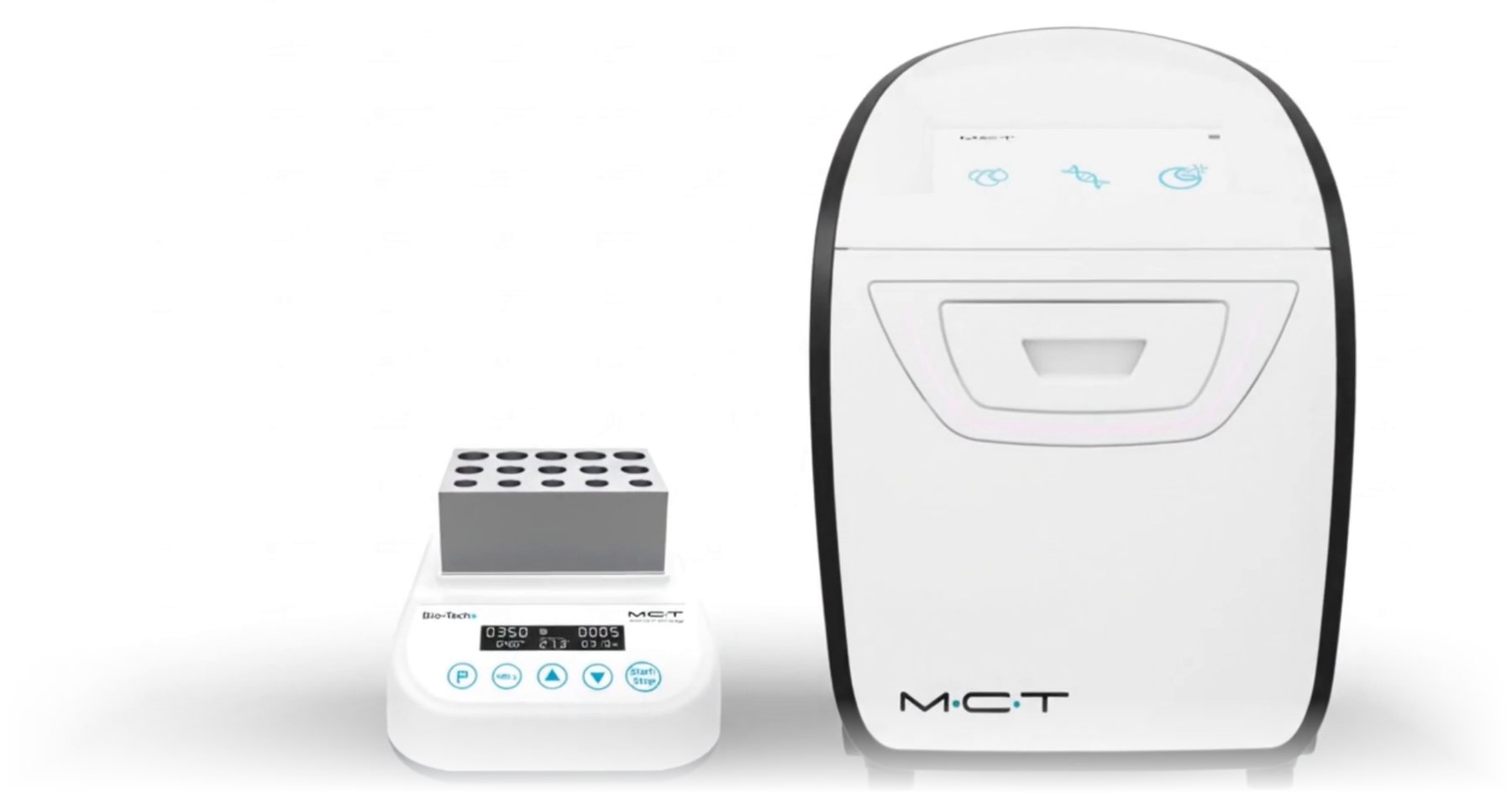
Exo-Tech is an add-on to your MCT Exosome protocol: the MCT System prepares the exosomes, the Exo-Tech Dry Bath builds the scaffold.
Add-on
Exo-Tech Dry Bath
A 90 °C program structures platelet-poor plasma (PPP) into a viscoelastic gel.
Plasma gel
Core technology
MCT System
Photothermal biomodulation with the Exosomes preset: PRP is preconditioned to release autologous platelet-derived exosomes.
MCT Exosomes
The protocol
Three steps at the point of care
One blood draw, two syringes: plasma gel from the PPP, MCT Exosomes from the PRP, mixed into Exo-Tech Gel.
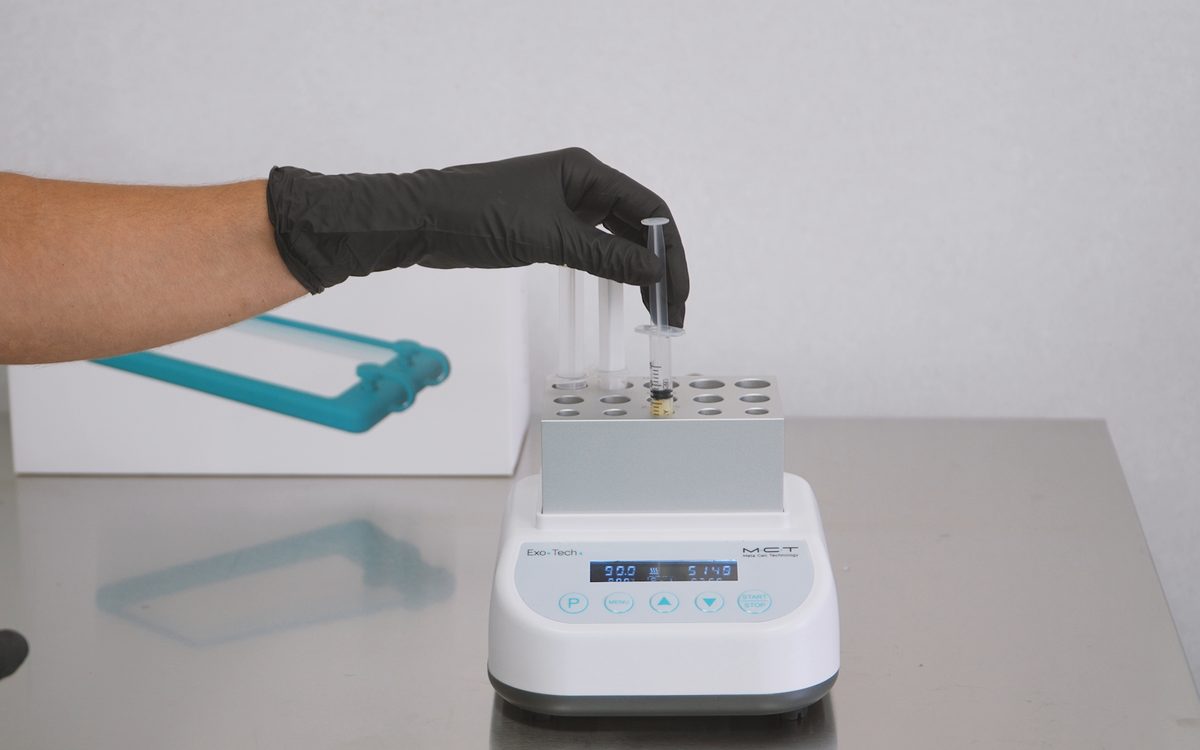
Plasma gel
PPP is heated at 90 °C in the Exo-Tech Dry Bath: its proteins unfold and aggregate into a viscoelastic scaffold, then cool to ≤ 37 °C.
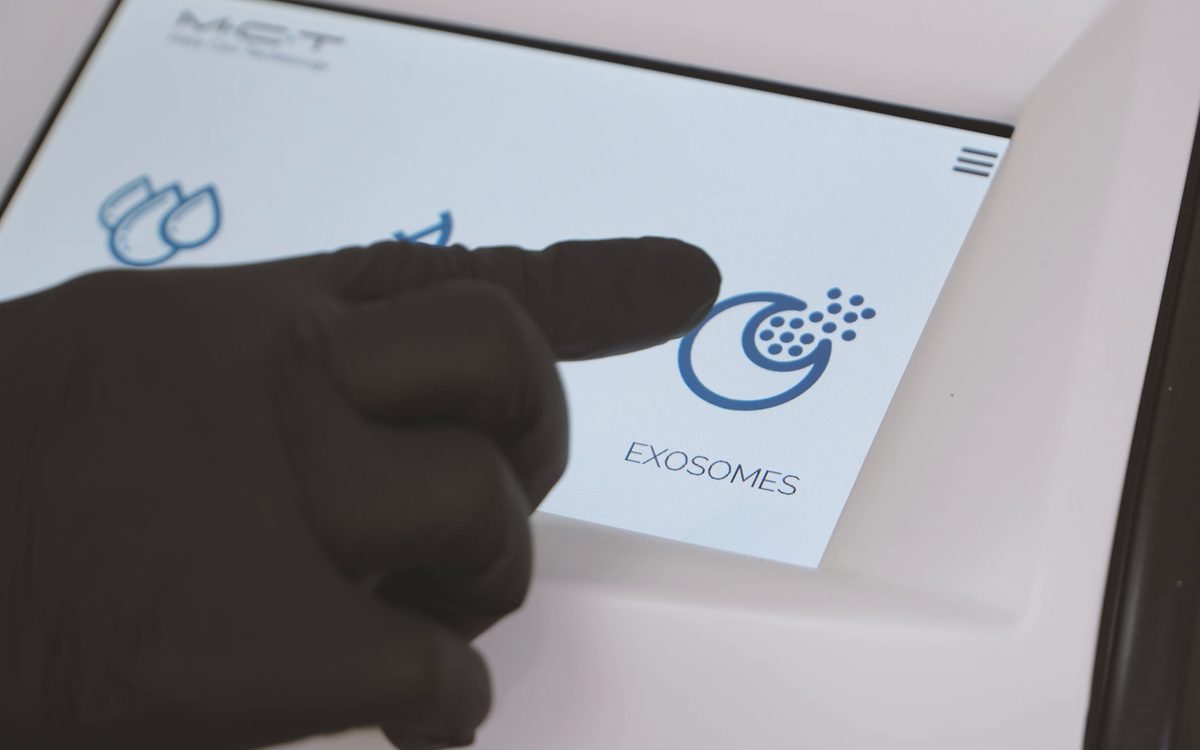
MCT Exosomes
PRP from the same draw is processed in the MCT System with the Exosomes preset, to enrich it with platelet-derived exosomes.
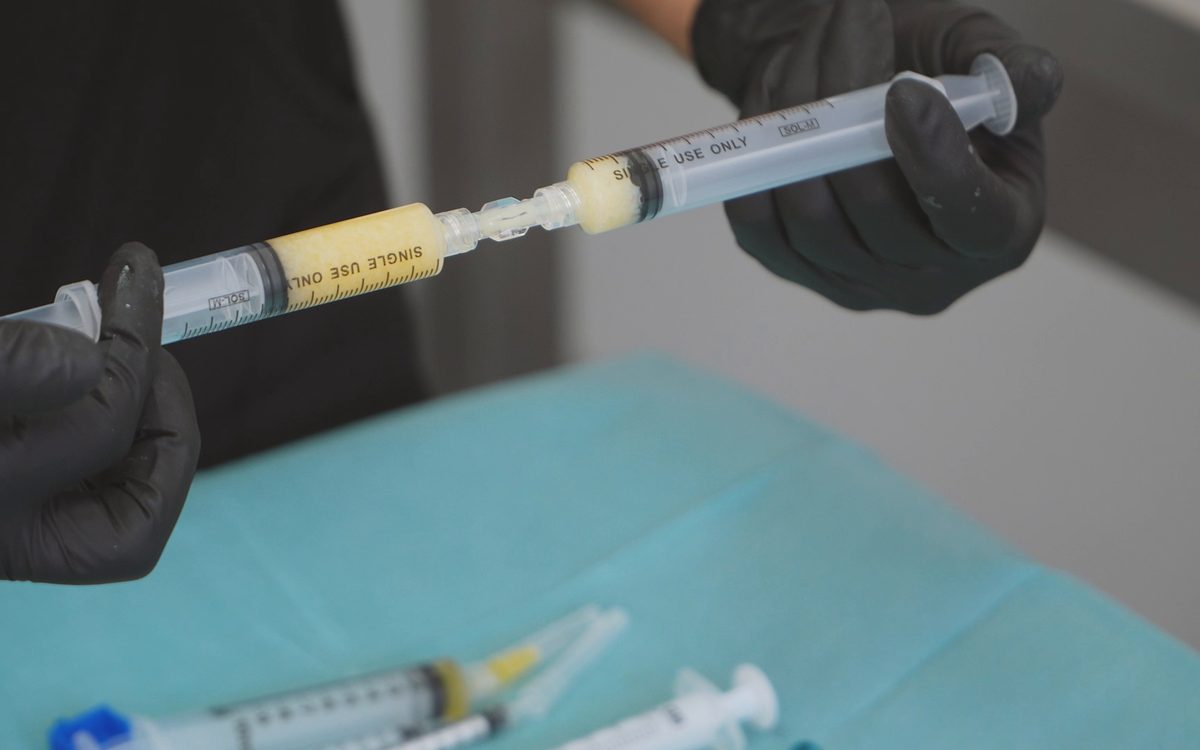
Exo-Tech Gel
Both syringes are joined with a Luer-lock connector and mixed until uniform. Ready for injection.
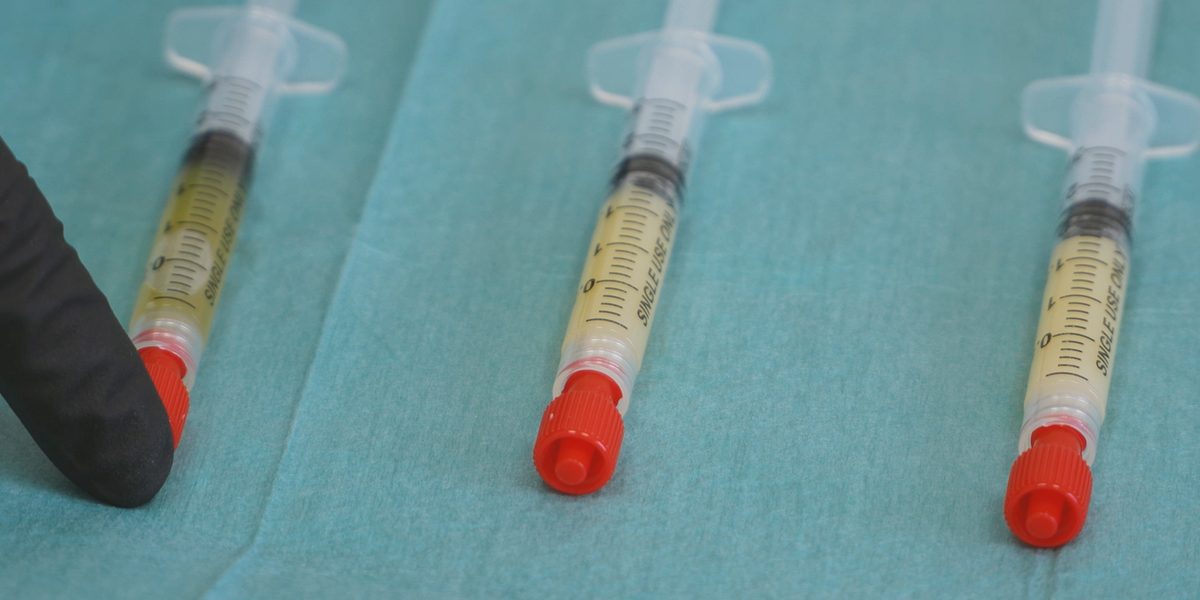
Heating time sets the consistency
Not a concentration: longer exposure means more protein structuring and a firmer, more cohesive gel.
- 3 minSoft More fluid; even distribution in superficial planes.
- 6 minIntermediate A balance between distribution and support.
- 9 minFirm Stays localised; deeper planes and structural support.
In clinical practice
The regenerative alternative to synthetic fillers
Structure and biological signalling to improve skin quality from within, with natural, progressive results.
3
Treatment sessions
30–45
Days between sessions
6–12
Months to follow-up
Treatment areas
- Forehead & glabella
- Temporal area
- Under-eye
- Crow’s feet
- Cheeks
- Nasolabial folds
- Marionette lines
- Lips & perioral area
- Chin & jawline
- Neck
- Hands
Intradermal or subdermal placement, with the gel consistency matched to the plane and the indication.
Scientific background
The science behind Exo-Tech
MCT research on autologous exosome quantification, and the published literature on plasma gel and hydrogel-based exosome delivery.
Autologous platelet-rich plasma exosome quantification after two thermo-photobiomodulation protocols with different fluences
Journal of Photochemistry and Photobiology · 2025 — Laura Cordero, Joan Carles Domingo, Elena Sánchez-Vizcaíno Mengual, Hernán Pinto
MCT research
Assessment of the efficacy and safety of platelet poor plasma gel as autologous dermal filler for facial rejuvenation
Journal of Cosmetic Dermatology · 2019 — Doghaim NN, El-Tatawy RA, Neinaa YME
Plasma gel
Platelet-poor plasma gel vs platelet-rich plasma for infraorbital rejuvenation: a clinical and dermoscopic comparative study
Dermatologic Therapy · 2020 — Neinaa YME, Hodeib AAE, Morquos MM, Elgarhy LH
Plasma gel
In vivo assessment of plasma gel: regenerative potential and limitations as a filler
Journal of Cosmetic Dermatology · 2025 — Cheng H, Li J, Zhao Y, Xia X, Li Y
Plasma gel
Hydrogel-exosome system in tissue engineering: a promising therapeutic strategy
Bioactive Materials · 2024 — Fan MH, Pi JK, Zou CY, et al.
Exosome delivery
Hydrogels for exosome delivery in biomedical applications
Gels · 2022 — Xie Y, Guan Q, Guo J, Chen Y, Yin Y, Han X
Exosome delivery
Clinical FAQs
A 15-page guide for clinicians
Preparation, density selection, injection technique and safety. Request it with the form below; some of the questions it answers:
- How does Exo-Tech Gel differ from plasma gel alone?
- Do the 3-, 6- and 9-minute values represent concentration?
- How should plasma gel density be selected?
- Is there a risk of vascular occlusion, and how is it managed?
- Can Exo-Tech Gel be combined with HA fillers in the same session?
Exo-Tech in Practice: Answers to the Most Common Clinical Questions


