
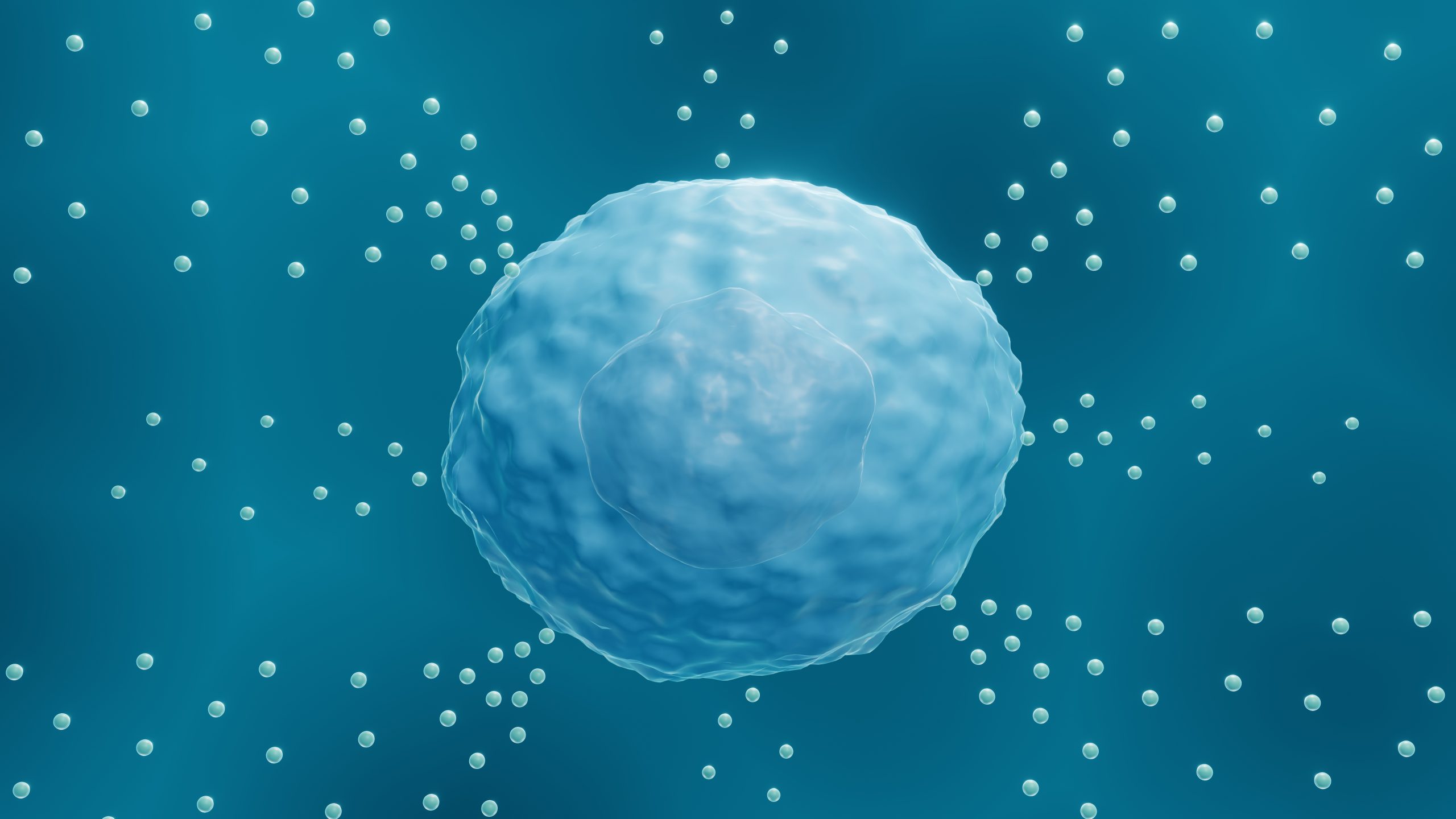
Exosomes — nano-sized extracellular vesicles released by virtually all cells — are critical mediators of intercellular communication with enormous potential in diagnostics, regenerative medicine, and targeted therapeutics.1 Their intrinsic ability to carry proteins, lipids, and genetic material (including mRNA and miRNAs) from donor to recipient cells makes them valuable biomarkers and delivery vehicles for clinical applications.2 Exosomes have demonstrated significant potential for applications in tissue engineering, wound healing, neurodegenerative disease treatment, and cardiovascular disease intervention.3,4 However, exosome analysis remains challenging.5
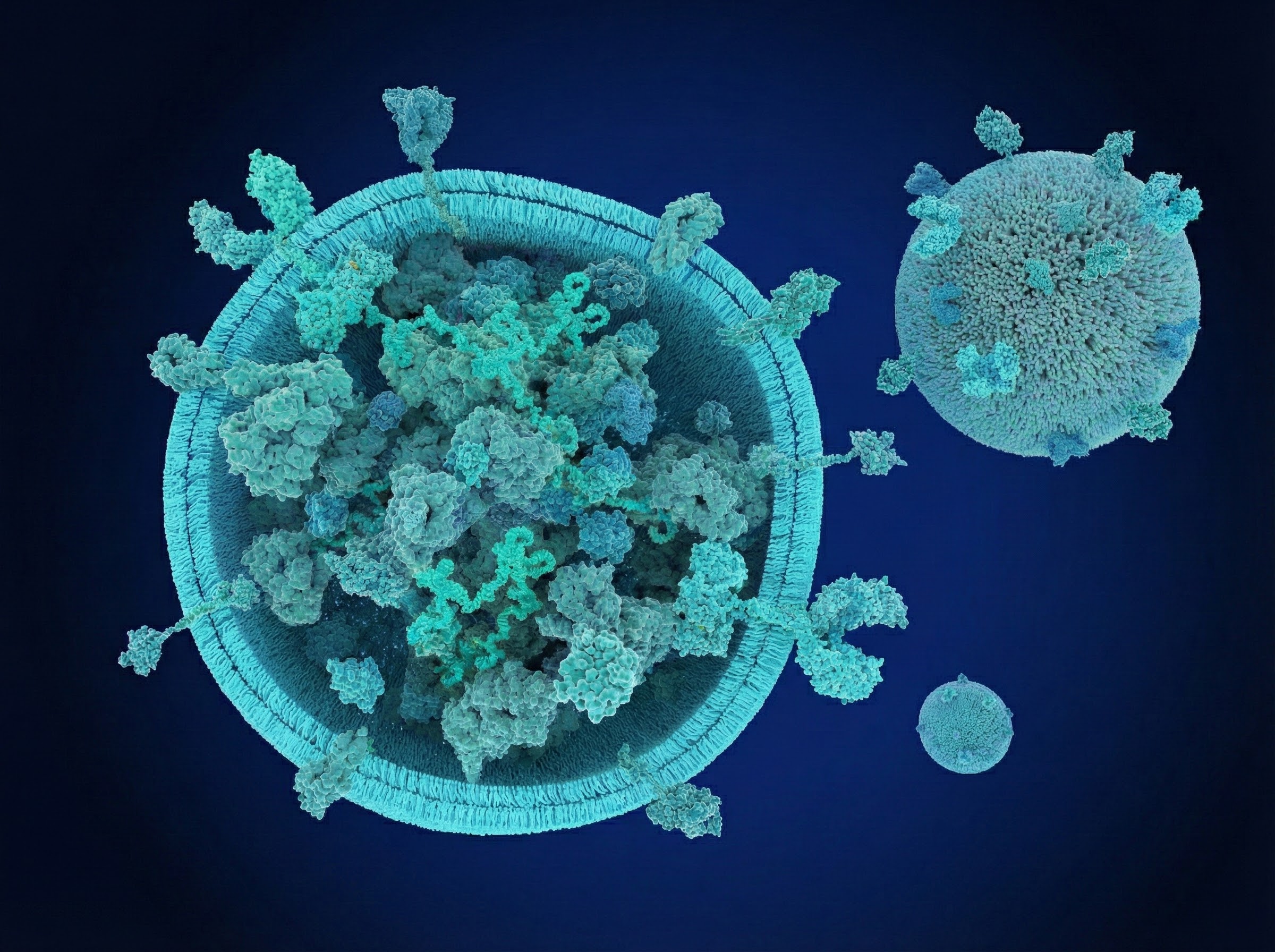
Figure 1 : Three-dimensional representation of an exosome.
How Concentration & Exosome Quantity Matter?
Purity, cargo, and exosome integrity are considered more critical than exosome concentration, a higher concentration is generally associated with better regenerative outcomes, though not linearly.7
Studies show that higher exosome doses often lead to more pronounced regenerative effects in wound healing or neurogenesis, but the therapeutic window remains to be determined.1,7
Photothermal Biomodulation to Enhance Exosome Release: Improving Quality and Quantity of Blood-Derived Exosomes
Emerging evidence suggests that photothermal biomodulation (PTBM) preconditioning can prepare platelets to increase exosome release.9 PTBM preconditioning may enhance exosome release, representing a promising advance for platelet-rich plasma (PRP)-based regenerative approaches.
In our recent Biomedicines review — “Human Blood Exosomes: Isolation and Characterization Methods, Variability, and the Need for Standardized Protocols” — we systematically analyzed published data on exosome concentrations in plasma, serum, and PRP from healthy individuals and highlighted that preconditioned PRP with PTBM reported the highest exosome concentrations.9 Furthermore, we also reported that isolation and quantification methods exhibit high variability, which strongly influences the overall quantity and quality of the exosomes obtained. This fact directly impacts the research and clinical outcomes liability, making direct comparisons challenging. Rigorous standardization of protocols is essential to advance the scientific understanding and the clinical potential of exosome-based therapies.
Why a Standardization for Exosome Clinical and Therapeutic Innovation?
The clinical translation of exosome-based applications has been hampered by a lack of standardized methods for isolating, quantifying, and characterizing circulating exosomes.10
Reported blood exosome ranges vary widely across studies, depending on the technique used, with plasma values spanning several orders of magnitude. This inconsistency is not trivial; it reflects fundamental differences in how exosomes are isolated and measured.11
Each method has distinct technical strengths and limitations, and choices made during sample processing (e.g., centrifugation forces, fluid handling, pre-analytical conditions) dramatically influence yield, purity, and exosome counts.
For clinicians engaged in translational research or therapeutic development, this means that cross-study comparisons are unreliable. Without harmonization, defining physiological or pathological benchmarks for exosome biomarkers—a necessary step for regulatory approval and clinical uptake—is not possible.
– Clinical Areas and Implications of Standardization:
Biomarker discovery and validation →increase diagnostic accuracy.
Therapeutic development of preclinical models →increases therapeutic consistency, drug loading, and delivery efficiency.
Regenerative and Personalized Medicine →patient responses may reflect real biological effects.
– Rigorous Protocols
Rigorous, consensus-driven protocols are essential for:
- Defining the standard reference ranges for exosome populations in blood.
- Harmonizing multicenter clinical trials.
- Establishing regulatory-grade quality standards.
- Reducing variability in diagnostic and therapeutic outputs
This is particularly crucial for blood-derived exosomes, where even subtle differences in isolation (e.g., ultracentrifugation vs. size-exclusion techniques) can lead to divergent downstream interpretations.9
What Does Standardization Mean for Clinicians and Meta Cell Technology Customers?
At Meta Cell Technology, which operates at the intersection of advanced cell technologies and clinical innovation, we understand these challenges and address them.
· Prioritizing validated and reproducible exosome isolation workflows
· Implementing cross-platform quality controls
· Engaging in collaborative efforts to establish field-wide standards
Standardization implementation will not only strengthen the scientific rigor of their own projects but also catalyze the broader adoption of exosome-based diagnostics and therapeutics in real-world clinical settings.
Conclusion
Blood exosomes hold transformative promise across healthcare, but realizing this promise depends on methodological clarity and standardization. By promoting robust protocols and rigorous analytical practices, both clinicians and biotechnology innovators can turn exosome research from a concept into a clinical reality that delivers reliable diagnostics and innovative therapies to patients.
Meta Cell Technology contributes with a platform that includes standardized protocols to enhance the performance of autologous platelet-derived exosomes, thereby improving outcomes in regenerative therapies.
References
-
Odehnalová N, Šandriková V, Hromadka R, Skaličková M, Dytrych P, Hoskovec D, et al. The potential of exosomes in regenerative medicine and in the diagnosis and therapies of neurodegenerative diseases and cancer. Front Med (Lausanne) [Internet]. 2025 Mar 13;12. Available from: https://www.frontiersin.org/articles/10.3389/fmed.2025.1539714/full
-
Gurung S, Perocheau D, Touramanidou L, Baruteau J. The exosome journey: from biogenesis to uptake and intracellular signalling. Cell Communication and Signaling [Internet]. 2021 Apr 23;19(1):47. Available from: https://biosignaling.biomedcentral.com/articles/10.1186/s12964-021-00730-1
-
Han C, Yang J, Sun J, Qin G. Extracellular vesicles in cardiovascular disease: Biological functions and therapeutic implications. Pharmacol Ther [Internet]. 2022 May;233:108025. Available from: https://linkinghub.elsevier.com/retrieve/pii/S0163725821002278
-
Zhang S, Chu WC, Lai RC, Lim SK, Hui JHP, Toh WS. Exosomes derived from human embryonic mesenchymal stem cells promote osteochondral regeneration. Osteoarthritis Cartilage [Internet]. 2016 Dec;24(12):2135–40. Available from: https://linkinghub.elsevier.com/retrieve/pii/S106345841630173X
-
Lee KWA, Chan LKW, Hung LC, Phoebe LKW, Park Y, Yi KH. Clinical Applications of Exosomes: A Critical Review. Int J Mol Sci [Internet]. 2024 Jul 16;25(14):7794. Available from: https://www.mdpi.com/1422-0067/25/14/7794
-
Nguyen VVT, Witwer KW, Verhaar MC, Strunk D, van Balkom BWM. Functional assays to assess the therapeutic potential of extracellular vesicles. J Extracell Vesicles [Internet]. 2020 Nov 29;10(1). Available from: https://isevjournals.onlinelibrary.wiley.com/doi/10.1002/jev2.12033
-
Chen Y, Qi W, Wang Z, Niu F. Exosome Source Matters: A Comprehensive Review from the Perspective of Diverse Cellular Origins. Pharmaceutics [Internet]. 2025 Jan 22;17(2):147. Available from: https://www.mdpi.com/1999-4923/17/2/147
-
Zeng H, Wu T, Luo S, Zeng A. MiRNA-loaded MSC exosomes restore autophagy flux for acute pancreatitis therapy. Front Immunol [Internet]. 2025 Aug 6;16. Available from: https://www.frontiersin.org/articles/10.3389/fimmu.2025.1613716/full
-
Sánchez-Vizcaíno Mengual E, Cordero L, Pinto H. Human Blood Exosomes: Isolation and Characterization Methods, Variability, and the Need for Standardized Protocols—A Review. Biomedicines [Internet]. 2025;13(12). Available from: https://www.mdpi.com/2227-9059/13/12/2970
-
Lee KWA, Chan LKW, Hung LC, Phoebe LKW, Park Y, Yi KH. Clinical Applications of Exosomes: A Critical Review. Int J Mol Sci [Internet]. 2024;25(14). Available from: https://www.mdpi.com/1422-0067/25/14/7794
-
Zhang Y, Bi J, Huang J, Tang Y, Du S, Li P. Exosome: A Review of Its Classification, Isolation Techniques, Storage, Diagnostic and Targeted Therapy Applications. Int J Nanomedicine [Internet]. 2020 Sep;Volume 15:6917–34. Available from: https://www.dovepress.com/exosome-a-review-of-its-classification-isolation-techniques-storage-di-peer-reviewed-article-IJN

